How to sell Pilates videos online
For certified instructors and small studios with recorded classes ready to sell. The end state is a paid library under your own name — organized by level, duration and equipment, sold as recurring access, launched to the clients you already have. Four steps: audit, catalog, access, launch.
Last reviewed
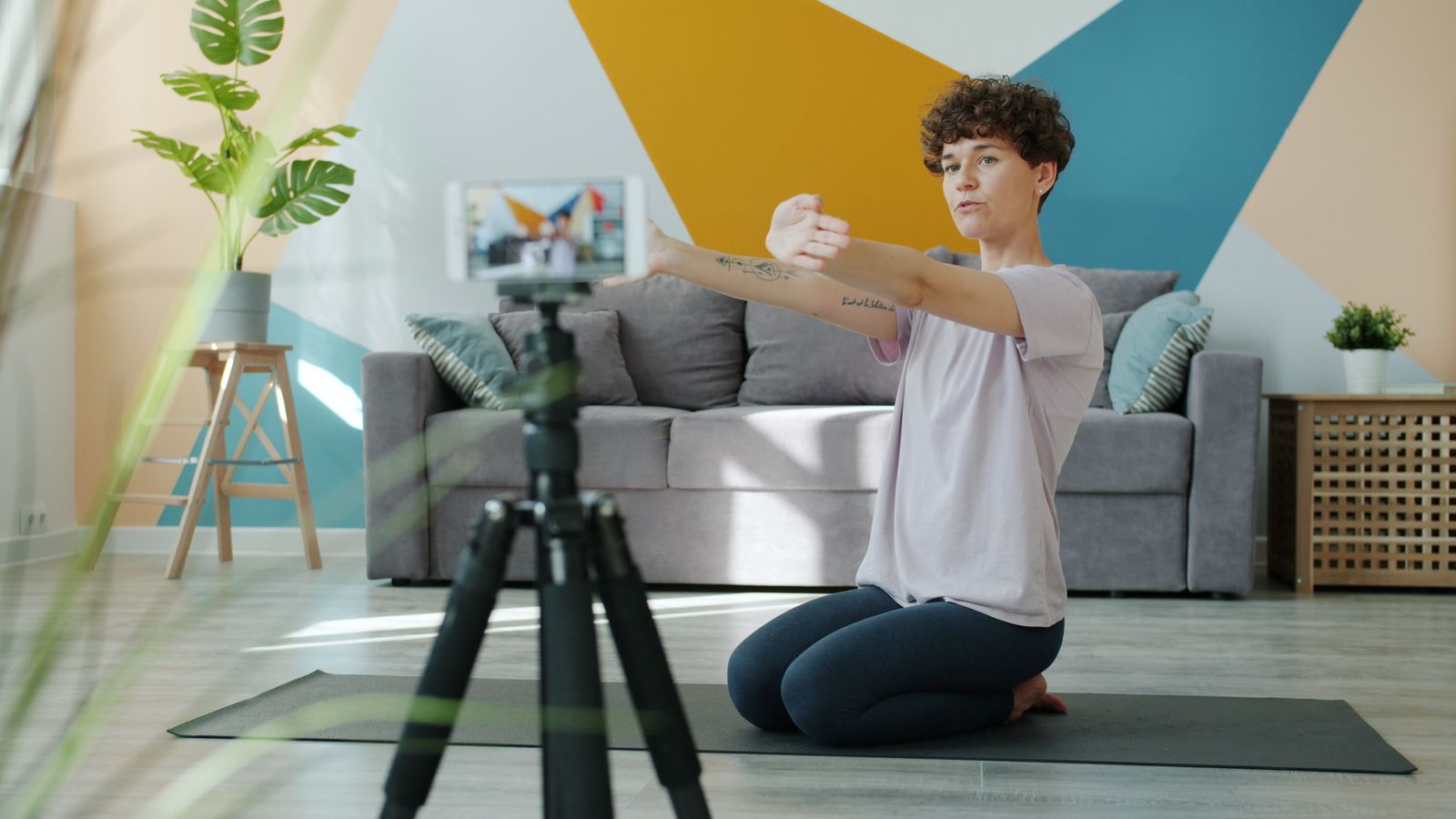
The market for paid online Pilates is not hypothetical: independent instructors and single studios already run on-demand brands that rank beside the big subscription libraries, sell through their own apps, and convert free YouTube audiences into paying members. What has been missing is the playbook — how an instructor with a drive full of recordings turns them into that business. This is it, in four steps:
- Audit your recordings
Take stock of what you have filmed, what meets your quality floor, and what you have the rights to sell.
- Structure the catalog
Organize by level, duration, equipment and focus, with series that give members a path.
- Set access and pricing
Decide the tiers, the payment structure and the previews that let new clients try before they pay.
- Launch to your clients
Open with a founding offer to the people who already train with you, then grow by cadence and referral.
What you are selling
First, the objection every instructor raises: the big libraries already exist. True — and beside the point, because you are not selling what they sell. A subscription library sells volume: thousands of classes, hundreds of teachers, something for everyone. You sell the opposite: one method, taught consistently, by the instructor your clients chose — with progressions that build deliberately and a teacher who knows the people practising. Method, progression and relationship are the product; catalog size is not, and competing on it would be losing on purpose.
Second, what the product is technically: access, not files. Selling video files means clients own copies and pay you once. Selling a course means a finish line. Selling access to a living library — classes, series, new work arriving on a cadence — is what recurs: clients pay while the membership keeps earning its place in their week. Everything in this guide builds toward access as the product.
Audit what you already have
Most instructors are closer to launch than they think, because the raw material already exists — pandemic-era Zoom classes, filmed sessions, a phone full of clips. Audit it against four tests before building anything. Quality floor: is the framing full-body, the audio clearly audible, the cueing complete? A class can be plain; it cannot be inaudible. Rights: is there commercial music in the background you cannot license for sale? A class with unlicensed tracks cannot be sold, whatever its teaching quality. Consent: do recordings show client faces or names from live sessions? Get written permission or edit them out. Coherence: does the class fit the catalog you are about to design, or is it an orphan that will confuse the structure?
What survives the audit is your launch catalog; what fails it tells you exactly what to film next. Either way you leave the audit with a list, not a feeling.
Structure a catalog clients can navigate
Look at how the established Pilates libraries organize themselves and a pattern repeats, because it works. Classes are findable by level (beginner to advanced, in your own naming), duration (a fifteen-minute reset and a full hour are different products), equipment (mat, props, reformer, chair — stated before purchase, always), and focus (core, mobility, posture, full body — the reason someone presses play today). A member should get from "twenty minutes, mat, beginner" to a playing class in seconds; every extra step is where practice sessions die.
The unglamorous half of this work is metadata and naming. Title every class so it describes the practice, not the mood — "Reformer intermediate, 30 min, hips and hamstrings" sells a decision; "Wednesday flow" sells a memory. Write one plain sentence per class on who it is for and what it assumes, keep the labeling vocabulary identical across the whole catalog, and settle the naming scheme before you upload fifty classes rather than after.
Two more layers turn a findable catalog into a subscribable one. Series and progressions are your teaching made visible: a foundations sequence for new members, ordered blocks that build over weeks, themed programs with a beginning and an end. They answer the question a lone list of classes never answers — "what should I do next?" — and they are precisely what a one-instructor library has that a thousand-class archive does not. Previews are the front door: a handful of full classes open to everyone, so a prospective member can judge your teaching before paying. The incumbent catalogs below are worth an hour of study — structure, labeling, series design — with the date each was checked:
Catalog patterns worth studying
- Pilates Anytime — the category-leading subscription library Checked on
- Pilatesology — a classical-method subscription library Checked on
- Hot Pilates On Demand — an independent studio's on-demand catalog Checked on
- Pilates Barre OnDemand — a single-studio on-demand brand Checked on
- Online Pilates Classes — a library segmented by reformer, mat and chair Checked on
- Pilates On Demand with Lindsay — the free YouTube channel beside a paid app Checked on
- Pilates On Demand on Google Play — the same brand's instructor-branded app Checked on
Mat, reformer, and chair: access tiers
Apparatus is the structural decision mat-first disciplines never face, and the incumbent catalogs treat it as first-class: reformer, mat and chair content clearly separated, filterable, and labelled before any payment. Do the same from day one. Every class states its equipment up front; nobody buys access their living room cannot use.
Then decide whether apparatus is a filter or a tier. A single membership with clear equipment filters is the simple answer, and the right one for most instructors starting out. Tiered access — a mat membership, with equipment work in a tier above it — matches how the audiences differ: reformer owners have already invested seriously in their practice and specialised teaching is worth more to them. If you plan tiers, confirm what your platform supports before designing the offer around it, and keep the communication rule either way: requirements before purchase, not after.
Choose how clients pay
A Pilates library sells in three shapes — subscriptions, one-time purchase, free previews — and most instructors should run all three. The membership is the primary offer: ongoing access to the whole library, or to a tier of it, while the subscription runs — recurring revenue for you, unlimited practice for the member. A series purchase is a one-time payment for an ordered block, which suits structured programs and clients not ready to subscribe. Free previews are the discovery layer that makes the other two sellable. Run the membership as the offer that carries the business, and let the other two feed it.
Structure is not price: what to charge — the packaging packaging maths, the churn maths, the floor your costs set — is the previous stage of this funnel, and if you skipped it, price before you launch.
Set up access and playback
The machinery under the catalog is what makes it a business: checkout, accounts and a paywall that holds. A client pays — by Card, Apple Pay, Google Pay — gets an account, and from then on the paywall decides what plays: previews for everyone, the library for members, tiers if you sell them. Under your own brand, that machinery is what Propel provides, with apps on Web, iOS, Android, Apple TV, Android TV — so the library lives on the screens clients already practice in front of, including the television, under your name rather than a marketplace's.
Set playback expectations carefully where capabilities are not confirmed: whether classes can be downloaded for offline practice is a question to ask any platform directly, and promising it before confirming it is how launch-week refunds happen. Equally, hold the boundary on what a recorded-access platform is not: Propel does not run bookings, timetables or rosters, does not track attendance or client progress, and does not build training or rehabilitation programs. Your live schedule stays in your booking tools; your clinical referrals stay with clinicians.
Launch to the clients you already have
Do not launch to the internet; launch to your list. Studio clients, private clients, the people who ask what to practice between sessions — they already trust your teaching, and they convert at rates no cold audience approaches. Tell them directly, one by one where the relationship warrants it, with a founding offer that rewards being first: a founding rate they keep, or a founding period included. The scarcity is real: the founding offer exists once and never returns.
Give everyone else the free path: a sample class or two, shared where your audience already is. If you run a free channel, you are following the pattern the successful on-demand brands prove out — the free audience meets your teaching at no risk, and the library is the next step for the ones who want structure, progression and the full catalog. The free class does the selling; the founding offer does the closing. And measure the launch simply: how many people took the free class, how many became members. Those two numbers tell you more than any launch-week noise — and they set the baseline every later experiment is judged against.
Keep members past month three
Month three is where memberships are won. The first month runs on novelty and goodwill; by the third, the library must have become part of how a member practices, or the cancellation is only unsent. Retention is built from four habits. Cadence: publish new work on a rhythm you can sustain, because members renew on what is coming, not what shipped. Progression paths: a member finishing a series should see the next one waiting — "what's next" answered is the quiet engine of renewal. Seasonal series: a January reset, a summer program, a themed month give long-standing members a reason to re-engage on schedule. Measurement: watch month-three retention by joining cohort, and when members leave, ask why — the answers are your next quarter's publishing plan.
None of this guarantees revenue. It stacks the same habits the durable libraries demonstrate: structure, cadence and a teacher worth staying for.
FAQ
How can one instructor compete with the big Pilates subscription libraries? +
By not competing on their terms. A large library wins on volume and price; you win on method, progression and relationship — one consistent teaching voice, a curriculum with intent, and an instructor who knows the members by name. The clients who choose you are buying your teaching, and a thousand strangers' classes are not a substitute for it.
How many videos do I need before launching? +
Enough that a member's first month feels generous and their second month has somewhere to go — for most instructors that is a coherent starter catalog across your core levels and durations, not a hundred classes. A small library with clear structure and a stated publishing cadence beats a large disorganized one.
Do my clients need a reformer? +
Only for classes that genuinely need one, and your catalog should say so before anyone pays. Mat classes carry most home practices; reformer and chair work belongs in its own clearly-labelled tier for clients who own the apparatus. Nobody should discover an equipment requirement after purchase.
What about refunds on digital classes? +
Publish your policy before launch and keep it simple. Free previews prevent most disputes, because clients know your teaching before paying. Digital-purchase consumer rules differ by country, so check the rules where you sell — this page is not legal advice.
Will selling videos online hurt my in-person business? +
In practice the library usually feeds the studio rather than starving it: clients practice between sessions, stay engaged through holidays and travel, and remain your clients in the months life keeps them from class. The library serves the hours your in-person teaching cannot reach.